
Patients researching facial fillers and hyaluronidase today often encounter two very different narratives.
The first is the traditional aesthetic medicine narrative: hyaluronic acid fillers are safe, effective, and temporary. When necessary, hyaluronidase can be used to dissolve unwanted filler.
The second narrative is commonly found on internet forums and social media groups. According to these accounts, hyaluronidase permanently destroys facial tissues, accelerates aging, and can leave patients with irreversible facial damage.
The truth is likely much closer to the first narrative than the second. At the same time, there is an important issue that many practitioners and patients may be overlooking: the long-term persistence of facial filler.
Why the Internet May Be Getting This Wrong
Online discussion forums are valuable because they allow patients to share experiences. However, they are also vulnerable to selection bias.
Patients who are pleased with their outcomes rarely spend years posting about them online. In contrast, patients who remain dissatisfied may continue posting repeatedly, sometimes hundreds of times over many years.
As physicians, we must listen respectfully to patients who report adverse outcomes. However, anecdotal reports alone cannot establish causation.
In many cases, photographs posted by individuals who believe they were harmed by hyaluronidase do not support the conclusion that facial tissues were destroyed by the enzyme. Some photographs appear more consistent with prior surgery, significant weight loss, normal aging, or pre-existing facial volume loss. Others demonstrate changes that are difficult to distinguish from the natural anatomy that existed before filler treatment.
The fact that a facial change becomes noticeable after hyaluronidase does not necessarily mean that hyaluronidase caused it.
What Does Hyaluronidase Actually Do?
Hyaluronidase is an enzyme that breaks down hyaluronic acid.
For years, some online commentators have claimed that hyaluronidase destroys not only filler but also normal facial tissues, leaving patients with permanent structural damage.
 A recent study by Yin and colleagues directly addressed this concern. Using both laboratory and animal models, the investigators found that hyaluronidase effectively degraded hyaluronic acid without causing significant damage to normal skin structure, dermal matrix organization, fibroblast function, or collagen production.
Their conclusion was straightforward: hyaluronidase reversed the effects of hyaluronic acid without destroying normal skin architecture.
These findings are consistent with decades of clinical experience. Hyaluronidase has long been used in ophthalmology, dermatology, reconstructive surgery, and anesthesia. If properly administered hyaluronidase routinely caused permanent connective tissue destruction, evidence of such injury would be expected across multiple medical specialties.
That evidence has not emerged.
The Real Problem: Persistent Filler
In my opinion, one of the most underappreciated realities in aesthetic medicine is that many hyaluronic acid fillers persist far longer than patients realize.
Historically, patients were often told that fillers lasted six to twelve months. Modern imaging studies have increasingly demonstrated that residual filler may remain present for years after injection.
Many patients believe their filler disappeared long ago because they have not received treatment recently. However, imaging frequently reveals residual product in the face years after the original injection.
I refer to this phenomenon as “ghost filler.”
Ghost filler is not a scientific term. It is simply a practical description of filler that remains present long after patients believe it has disappeared.
How Ghost Filler Changes Facial Appearance
A common pattern involves patients receiving one or two syringes of filler every year for many years.
Each individual treatment may appear reasonable. However, if a substantial portion of previous filler remains, the total amount of filler in the face gradually accumulates.
Over time, the oldest filler may behave differently than it did when first injected. In some patients, retained filler appears to attract water, producing facial heaviness, persistent swelling, loss of contour, and an overfilled appearance.
The process occurs so gradually that patients often adapt to it. What began as a temporary enhancement becomes incorporated into their perception of their normal appearance.
As a result, many patients attribute these changes to aging, weight gain, or skin laxity rather than recognizing the contribution of persistent filler.
Some subsequently pursue additional filler treatments, laser procedures, eyelid surgery, or facelifts without addressing the retained filler itself.
Why Some Patients Look Younger After Filler Dissolution
Many people assume that removing facial volume must inevitably make a person look older.
My experience has often been the opposite.
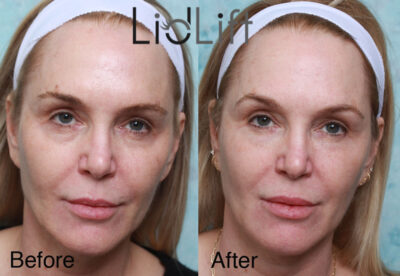
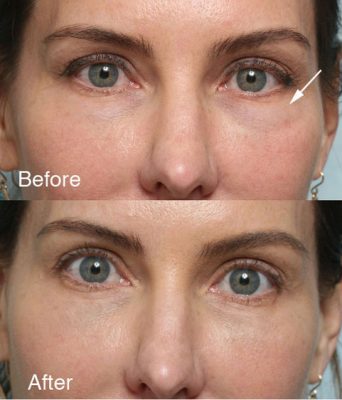
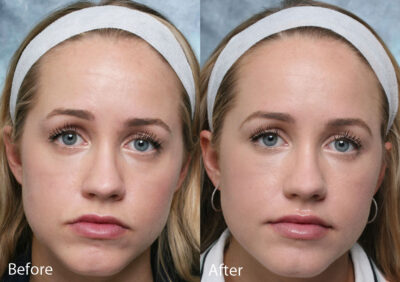
Patients with substantial amounts of retained filler frequently appear younger, fresher, and more natural after old filler is removed.
Reducing chronic puffiness can restore normal contours around the eyes, cheeks, jawline, and midface. Facial proportions may become more balanced. The face often appears less swollen and less artificially augmented.
In some cases, one or two carefully planned hyaluronidase treatments can produce a greater aesthetic improvement than years of additional filler.
What About “Posthyaluronidase Syndrome”?
A 2024 publication by Wilde and colleagues introduced the term “Posthyaluronidase Syndrome” to describe patients who report aesthetic decline or dissatisfaction following filler dissolution.
The existence of these patients is not controversial. Any practitioner who regularly dissolves filler has encountered individuals who feel they looked better before treatment.
The more important question is why.
One explanation proposed by some patients and online communities is that hyaluronidase destroys normal tissues.
However, current scientific evidence does not support that conclusion.
A more plausible explanation is that filler dissolution reveals pre-existing facial aging that had previously been masked by filler augmentation.
The same volume loss, skeletal anatomy, skin laxity, tear trough deformities, or contour deficiencies that originally motivated treatment remain present after the filler is removed.
In this scenario, the hyaluronidase did not create the problem. It simply revealed it.
A useful analogy comes from eyelid surgery. Patients occasionally perceive upper eyelid hollowing after successful ptosis repair. The surgery did not create the hollowing. Instead, elevating the eyelid unveiled pre-existing volume loss that had been partially concealed.
The same principle may apply following filler dissolution.
Psychological adaptation may also play a role. After years of seeing an augmented version of themselves in the mirror, patients may perceive their natural appearance as abnormal when the filler is removed.
This reaction is understandable. It does not necessarily indicate tissue injury.
A Different Philosophy of Filler Treatment
My approach to fillers has evolved over time.
I continue to believe that hyaluronic acid fillers are excellent products when used conservatively and thoughtfully. They can restore volume, improve contour, and produce highly natural results.
However, I also believe that the goal should be to use the smallest amount of filler necessary to achieve the desired effect.
For many patients, small maintenance treatments after approximately one year are entirely appropriate. Yet after several years of repeated treatment, it may be worthwhile to reassess whether accumulated filler is still helping the patient.
Sometimes the best treatment is not additional filler.
Sometimes the best treatment is to dissolve older filler, restore normal anatomy, and start fresh if additional volume is still desired.
The Bottom Line
The current scientific literature does not support the claim that properly administered hyaluronidase routinely destroys normal facial tissues.
At the same time, increasing evidence and clinical experience suggest that long-term filler persistence is far more common than many patients realize.
The central question facing aesthetic medicine may not be whether hyaluronidase is harming faces.
Instead, it may be whether years of accumulated filler are being mistaken for aging—and whether carefully removing that retained filler can help restore a more natural and youthful appearance.
For many patients, the path to looking younger may not involve adding more filler.
It may involve removing the filler that never truly disappeared.
References
- Yin B, Jiang Z, Shi J, Wang H, Wang P, Jia C. Hyaluronidase Reverses the Effect of Hyaluronic Acid Without Destroying Normal Skin Structure.J Cosmet Dermatol. 2026;25(5):e70870.
- Charlotte L. Wilde, Jiang K, Lee S, Ezra DG. The Posthyaluronidase Syndrome: Dosing Strategies for Hyaluronidase in the Dissolving of Facial Filler and Independent Predictors of Poor Outcomes.Plast Reconstr Surg Glob Open. 2024;12:e5765.