
Every eyelid surgery should be individualized to your particular situation. That means a detailed, in person assessment taking into account existing eye issues, health concerns, prior surgery, and your individual goals. You are entitled to be educated about your options, benefits, risks, and likelihood for success and failure for any proposed surgery. It is not right for a surgeon to take away your hope simply because they don’t perform or are not comfortable with a particular surgery.
Upper Eyelid Surgery Case 1
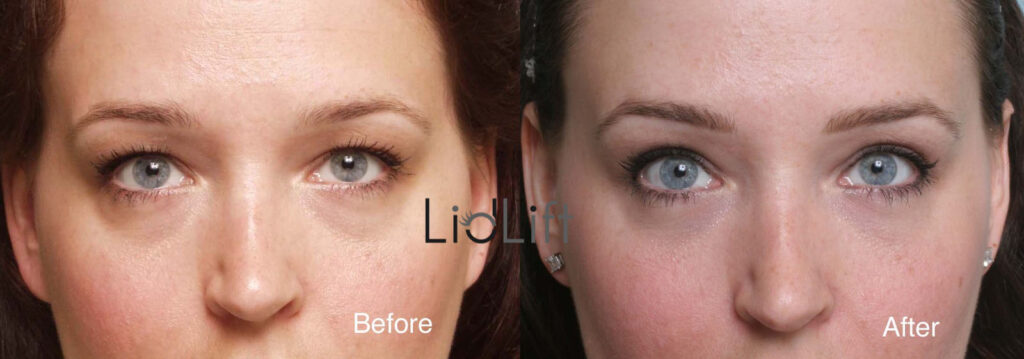
Cosmetic Concern: 33-year-old woman with heavy upper eyelids and lower eyelid fullness.
Diagnosis: Heavy brows are a feature she has had since childhood. The lower eyelids demonstrate a slight fullness from fat.
Treatment: Upper anchor blepharoplasty and lower transconjunctival arcus marginalis release blepharoplasty.
Discussion: The goal here was to remove enough skin in the upper eyelids to accentuate the upper eyelid platforms without removing too much of the fullness of the upper eyelid which is an important feature of her face. The anchor blepharoplasty is a step that adds support to the eyelid platform and definition to the upper eyelid crease. The patient shared with us that this surgery literally changed her life.
Upper Eyelid Surgery Case 2
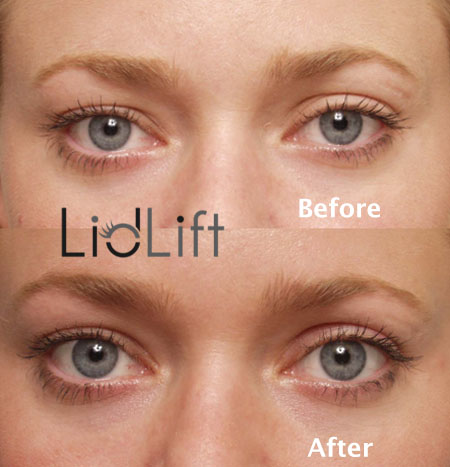
Cosmetic Concern: 28-year-old woman concerned with eyelid symmetry. In talking with her, her primary concern is that the eyes are both heavy but the right eye looks heavier than the left eye.
Diagnosis: Bilateral upper eyelid ptosis with facial asymmetry. Note that her right eye sits lower in the face than the left globe. Recognizing this fact determines the limits for what is possible surgically. Still we mostly judge the appearance of eyes relative to each other based on how analogous they appear. That means over all harmony is more important that millimeter by millimeter measurements.
Treatment: Bilateral upper anchor blepharoplasty, and upper eyelid anterior levator resection ptosis repair.
Discussion: It is essential to correctly diagnose the nature of the anatomic issues. The surgery must be appropriately tailored to the individual situation. Her result is completely natural and brightens her eyes. She was thrilled with her result.
Upper Eyelid Surgery Case 3
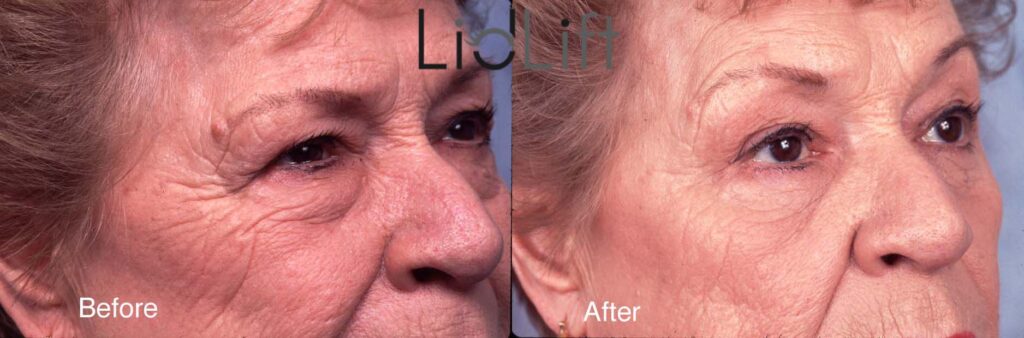
Cosmetic concern: 73-year-old woman who complained that she could not see her eyes any more. She was interested in cosmetic eyelid surgery to improve her appearance.
Diagnosis: Dermatochlasis of the upper eyelids and eyebrow ptosis. She has heavy wrinkling around the eyes and in the crow’s feet areas. The lower eyelids demonstrate herniated orbital fat.
Treatment: Upper and lower cosmetic eyelid surgery with upper anchor blepharoplasty and lower eyelid arcus marginalis release, and chemical peel. The lower eyelid surgery was performed from behind the eyelid avoiding a skin scar.
Discussion: She has achieved her goals with a significant improvement. Her down time lasted about 10 days. The peel was a medium depth 35% trichloroacetic acid peel. The skin was red for 6 weeks but this was hidden with makeup which she was able to wear beginning 1 week after surgery. Learn more about eyelid surgery here.
Upper Eyelid Surgery Case 4
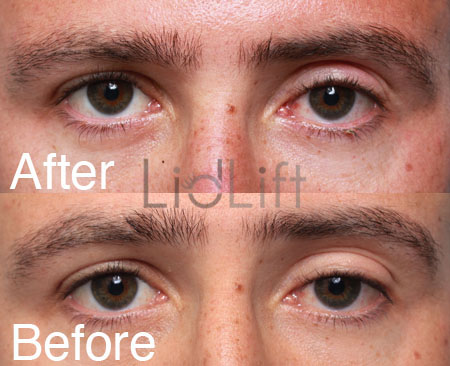
Cosmetic concern: 27-year-old man with three previous left upper eyelid ptosis surgeries for congential ptosis by well-regarded surgeons. His most recent surgery approximately 1 year before consulting Dr. Steinsapir was a rarely performed surgery called full thickness ptosis surgery where a strip of the upper eyelid is removed from front to back of the eyelid. Unfortunately, it failed to address the residual left upper eyelid ptosis. He saw Dr Steinsapir after being told that nothing further could be done for him by other oculoplastic surgeons.
Diagnosis: Residual left upper eyelid ptosis after three unsatisfactory repairs. He demonstrated significant left upper eyelid ptosis including a full thickness scar across the upper eyelid tarsal plate. Excursion of the left upper eyelid from looking down to looking all the up was notably good. This is referred to as levator function. Its assessment should be part of every ptosis examination.
Treatment: Treatment included a detailed in person examination and lengthy discussion regarding what could be reasonably expected. Given his history of several failed prior surgery, no guarantee of improvement could be offered. Despite this uncertainty, he chose to have revisional surgery with Dr. Steinsapir.
Discussion: Here he is a full year after surgery. He is not perfect but he is substantially improved. He feels much less self-conscious about his appearance. Learn more about repairing upper eyelid ptosis here.
Upper Eyelid Surgery Case 5
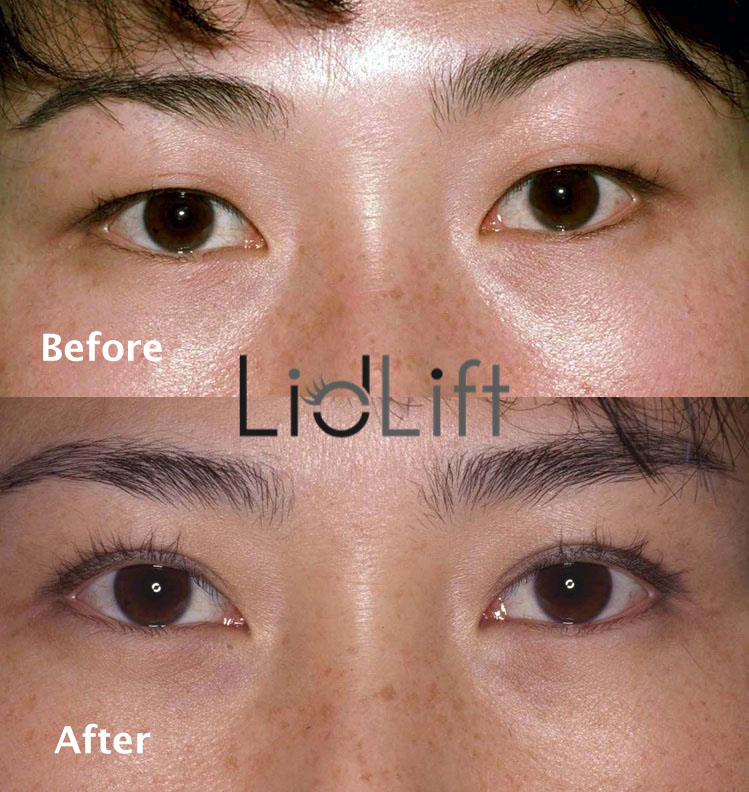
Cosmetic concern: 32-year-old woman desires a double eyelid fold.
Diagnosis: She has a rudimentary crease in the upper eyelids. This leaves her with no place to apply eye make up on the upper eyelid.
Treatment: Double fold surgery with an anchor blepharoplasty.
Discussion: Asian eyelid surgery is not about Westernizing the eyelid. Rather it is about conserving normal eyelid structure while at the same time providing complementary eyelid definition to produce the desired result. Typically this type of surgery involves about a week of downtime with persistent swelling gradually resolving over many weeks. Find more information about double fold surgery.
Upper Eyelid Surgery Case 6
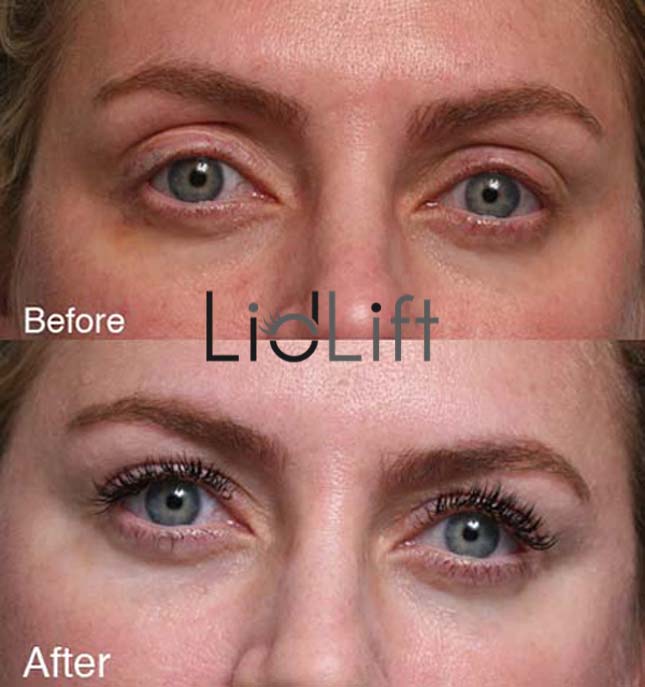
Cosmetic Concern: 44-year-old woman who had 7 prior surgeries to fix upper eyelid ptosis. She was left without upper eyelid folds. She was unhappy with the shape and contour of the upper eyelid. She also reported that her eyes always feel tight.
Diagnosis:
1. Bilateral upper eyelid ptosis.
2. Bilateral upper eyelid lash ptosis.
3. Bilateral compensatory eyebrow elevation.
4. Bilateral high upper eyelid crease
Treatment:
1. Bilateral anterior levator aponeurosis reconstructive ptosis surgery.
2. Bilateral anchor blepharoplasty.
3. Upper fold reconstruction with eyelid crease lowering surgery.
Discussion: The patient had no expectation that Dr. Steinsapir would be able restore her upper eyelid folds. In addition to the cosmetic improvement, the sensation of tightness she chronically experienced resolved. Dr. Steinsapir believes the discomfort may be related to internal scars that develop after the original eyelid surgery and are modified by the reconstructive surgery. Find more information about fixing upper eyelids after unsatisfactory surgery here.