
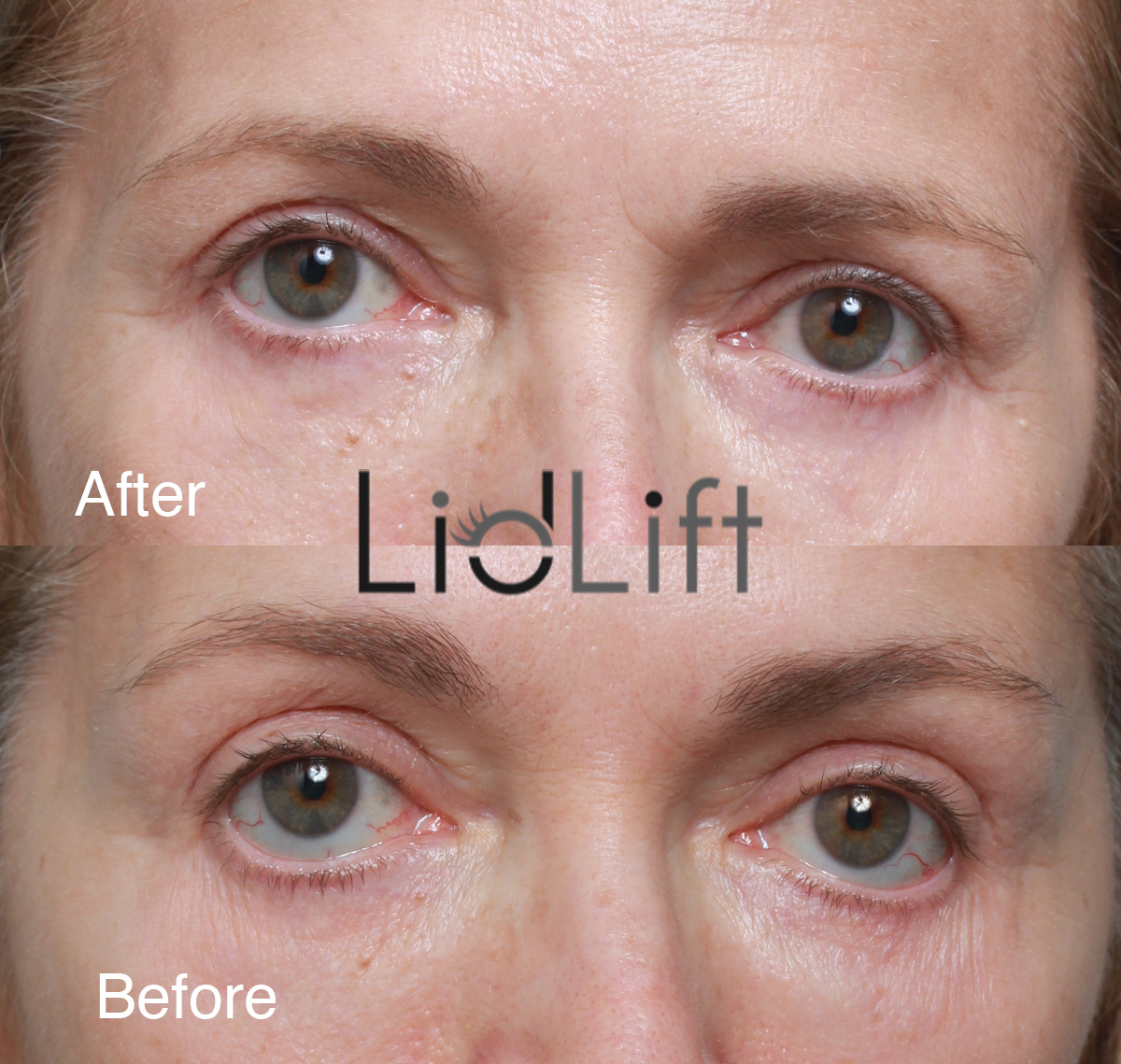
Lower eyelid retraction is one of the most challenging complications of cosmetic lower blepharoplasty. The lower eyelid may sit too low, exposing excessive white beneath the iris and changing the natural shape of the eye. The outer corner may become rounded, and in more severe cases the eyelid may pull away from the surface of the eye, a condition known as ectropion.
Lower eyelid retraction can be more than a cosmetic problem. More severe cases may cause dry eye symptoms, tearing, irritation, light sensitivity, and difficulty completely closing the eyelids.
Repairing lower eyelid retraction can be considerably more difficult than performing the original cosmetic surgery. This is because significant post-blepharoplasty lower eyelid retraction is seldom caused by a single problem. Successful reconstruction requires understanding what has changed in the lower eyelid and cheek and determining what tissues and structural support are needed to restore a more normal eyelid position.
Lower Eyelid Retraction Is Usually Not Simply a Loose Eyelid
Patients who develop lower eyelid retraction after blepharoplasty are sometimes told that they simply need a “stitch put in.”
A common approach is to tighten the outer corner of the eyelid with a canthoplasty or lateral tarsal strip procedure. There are circumstances where this is appropriate. An occasional patient truly has isolated lower eyelid laxity.
However, significant lower eyelid retraction after blepharoplasty is seldom caused by eyelid laxity alone.
The damaged lower eyelid is often vertically short, rather than simply horizontally loose. Surgery may have removed skin and soft tissue. The orbicularis oculi muscle that helps support the eyelid may have been weakened. Internal tissues may be scarred, and the normal relationship between the lower eyelid and cheek may have been disrupted.
Simply tightening an already short eyelid does not replace what is missing. In some circumstances, tightening can make the eyelid even shorter and worsen the underlying problem.
Why Does Lower Eyelid Retraction Develop After Blepharoplasty?
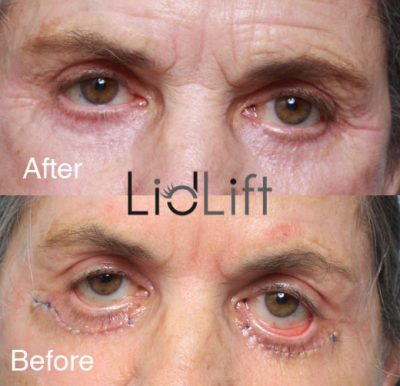
There is often no single explanation for why a particular patient develops lower eyelid retraction.
Skin and soft tissue may have been removed to improve lower eyelid wrinkling. Surgery may affect the orbicularis muscle that contributes to lower eyelid support. Healing can produce internal scarring and contraction.
Unanticipated postoperative bruising may also contribute to inflammation and subsequent scarring.
Preexisting facial anatomy can be important as well. In some patients, the cheekbone and lower orbital rim do not project far enough forward to adequately support the lower eyelid. This relationship is sometimes described as a negative vector, meaning that the eye projects farther forward than the cheek and orbital rim beneath it. This anatomy may make the lower eyelid more susceptible to retraction following blepharoplasty.
Having managed many of these eyelids, Dr. Steinsapir has found that there is often no single mechanism responsible. The problem is sometimes attributed primarily to scarring of the “middle layer,” or middle lamella, of the eyelid. In complex post-blepharoplasty lower eyelid retraction, however, the problem frequently involves several tissue layers and mechanisms working together.
One important clinical observation is that, in the majority of these cases seen by Dr. Steinsapir, the original surgery involved a skin incision just below the eyelashes.
The Lower Eyelid and Cheek Function Together
The lower eyelid should not be thought of as an isolated strip of tissue that simply needs to be pulled upward.
It is a three-dimensional structure composed of skin, muscle, connective tissue, retractors, tarsus, and conjunctiva. These tissues must work together while remaining flexible enough to blink, distribute the tear film, protect the cornea, and maintain the natural contour of the eye.
The cheek also provides important support for the lower eyelid. Loss of soft tissue, postoperative scarring, and inadequate projection of the lower orbital rim can all compromise this support.
For this reason, successful reconstruction requires evaluation of the entire lower eyelid-cheek complex, rather than treatment of a single presumed scar or simply tightening the outer corner of the eyelid.
Scar Release Alone May Not Be Enough
Scar release can be an important part of lower eyelid retraction repair. However, releasing scar does not replace skin, soft tissue, muscle function, or structural support that may have been lost or damaged.
Successful reconstruction therefore requires asking a different question:
What does this eyelid need to regain its normal position, shape, and support?
Depending on the individual patient, reconstruction may require bringing healthy skin and soft tissue upward from the cheek, restoring deficient orbital rim support, adding vertical height inside the lower eyelid, and carefully reconstructing the lateral canthus.
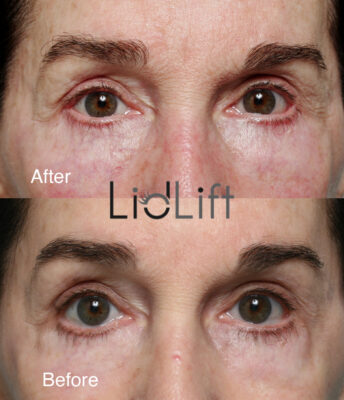
The Role of a Vertical Internal Cheek Lift
In many complex cases, healthy cheek skin and soft tissue can be recruited upward to help replace the vertical tissue deficiency of the lower eyelid.
Dr. Steinsapir uses a vertical internal cheek lift to mobilize these tissues and advance them toward the lower eyelid. This can help restore the relationship between the cheek and lower eyelid while avoiding the color and texture mismatch associated with placing a skin graft in the lower eyelid.
The objective is not simply to pull the eyelid upward. It is to restore the tissues and support needed to maintain the eyelid in a more natural position.
Restoring Support Along the Orbital Rim
A cheek lift alone may not provide sufficient support when the underlying lower orbital rim lacks adequate projection.
In appropriate patients, Dr. Steinsapir uses a custom-made ePTFE orbital rim implant. The implant restores projection along the lower orbital rim and provides a stable platform to which the vertically advanced cheek tissues can be secured.
This is particularly important in patients with negative-vector anatomy or inadequate structural support beneath the reconstructed lower eyelid.
When Is a Hard Palate Graft Needed?
The inside of the lower eyelid may also be vertically deficient. In these circumstances, a spacer graft can provide additional height and structural support.
Several materials have been used for lower eyelid spacer grafting. In complex post-blepharoplasty reconstruction, Dr. Steinsapir generally favors a hard palate graft, harvested from the roof of the mouth.
The hard palate graft provides durable internal support and can help control the position and contour of the reconstructed lower eyelid.
Not every patient requires a hard palate graft. The operation should be based on what the individual eyelid actually needs rather than applying the same procedure to every patient.
Is a Skin Graft Necessary?
When excessive lower eyelid skin has been removed, placing a skin graft may appear to be the most direct way to replace it.
Skin grafts can lengthen the lower eyelid, and there are circumstances in which they may be necessary. However, grafted skin rarely provides an ideal color and texture match for the extremely thin and specialized skin of the lower eyelid.
For a patient seeking correction of a cosmetic surgery complication, replacing one deformity with a conspicuous difference in skin color or texture may be an undesirable tradeoff.
Whenever possible, recruiting the patient’s existing cheek skin and soft tissue upward into the lower eyelid can provide a more natural aesthetic solution.
Lower Eyelid Reconstruction Must Be Individualized
Complex lower eyelid retraction after blepharoplasty may involve several deficiencies at the same time:
- Vertical shortage of skin and soft tissue
- Internal scarring involving more than one tissue plane
- Loss of normal orbicularis muscle function and eyelid support
- Inadequate projection and support at the lower orbital rim
- Loss of internal structural support needed to maintain normal eyelid contour
- Abnormalities of the lateral canthus
No single operation is appropriate for every patient.
For this reason, Dr. Steinsapir’s approach to severe post-blepharoplasty lower eyelid retraction may combine a vertical internal cheek lift, augmentation of the orbital rim with a custom-made ePTFE implant, a hard palate graft, and careful reconstruction of the lateral canthus.
The precise combination depends on the patient’s anatomy, the original blepharoplasty, any subsequent procedures, and what healthy tissues remain.
Reconstruction Is Not the Same as Restoration
Patients understandably want their eyes returned to exactly how they looked before the original blepharoplasty.
Unfortunately, that is not always possible.
Once tissue has been removed, muscle function altered, and normal anatomy replaced by scar, surgery cannot simply turn back the clock. Reconstruction uses the remaining tissues—and, when necessary, grafts and implants—to recreate as much normal eyelid anatomy, function, and appearance as possible.
With careful analysis of what is missing, substantial improvement in eyelid position, function, comfort, and appearance is often possible.
Choosing a Surgeon for Lower Eyelid Retraction Repair
Repairing lower eyelid retraction requires a very different skill set from performing the original cosmetic lower eyelid surgery.
A surgeon evaluating post-blepharoplasty lower eyelid retraction must determine not only where the eyelid should be positioned, but why it is in the wrong position and what tissues and structural support are missing.
Dr. Steinsapir’s practice is predominantly focused on repairing complex eyelid problems following previous cosmetic eyelid surgery. His approach to post-blepharoplasty lower eyelid retraction has evolved over decades of treating these challenging cases. He has published papers and book chapters on this subject, lectured nationally and internationally, and his contributions to the field have been formally recognized by the American Society of Ophthalmic Plastic and Reconstructive Surgery.
Every patient is different. The appropriate treatment depends on the original operation, remaining healthy tissue, orbital anatomy, eyelid function, and the patient’s individual reconstructive needs. There is no substitute for a detailed, in-person examination.
Frequently Asked Questions About Lower Eyelid Retraction Repair
Can lower eyelid retraction after blepharoplasty be repaired?
Yes. Significant improvement in eyelid position, function, comfort, and appearance is often possible. The appropriate reconstruction depends on which tissues and structural supports have been altered or lost.
Will my lower eyelids get better on their own?
Mild eyelid malposition soon after surgery may improve as swelling resolves and scar tissue matures. Established lower eyelid retraction caused by significant tissue deficiency, scarring, or loss of structural support is less likely to completely resolve on its own.
Is simply tightening the lower eyelid enough?
Sometimes, particularly when isolated eyelid laxity is the primary problem. However, significant post-blepharoplasty lower eyelid retraction often involves vertical tissue shortage, scarring, impaired muscle support, or inadequate cheek and orbital rim support. Tightening alone does not correct these deficiencies.
Do all lower eyelid retraction repairs require a hard palate graft?
No. A hard palate graft can provide valuable vertical height and internal structural support, but it is not necessary in every patient. The decision depends on the anatomy and reconstructive needs of the individual lower eyelid.
Will I need a skin graft?
Usually not. Although skin grafts are occasionally necessary, Dr. Steinsapir generally prefers to recruit healthy cheek skin and soft tissue when possible because it provides a better color and texture match for the lower eyelid.
When should lower eyelid retraction be repaired?
Timing should be individualized. Dr. Steinsapir generally allows at least six months after the previous surgery for swelling to resolve and scar tissue to mature before reconstruction. However, an early consultation can still be valuable to determine what has happened, discuss the likely course of healing, and understand future treatment options. Functional problems or unusual circumstances may occasionally require earlier intervention.
Can my eyelids be restored to exactly how they looked before blepharoplasty?
Not always. Surgery cannot necessarily recreate tissues that have been removed or restore anatomy exactly to its preoperative condition. The goal of reconstruction is to achieve the best possible improvement in eyelid position, function, comfort, and appearance with the tissues and reconstructive resources available.