July 14, 2011

Facial Sculpting with Microcurrent

Microcurrent facial sculpting is a rising trend, but buyer beware the cosmetic surgery fads.  Like lasers, the term “microcurrent” sounds sexy and high-tech.  But the reality of microcurrents is that they are a lot of hype and very little science.  The use of microcurrent devices is essentially unregulated.  FDA clearance of these devices is very simple for the manufacturers because the amount of current used is so small.  The marketing for microcurrents would have you believe that by stimulating your facial muscles, your face becomes more toned and appears lifted and more youthful.  There is no evidence that this is true.

The Truth About Microcurrents

Quacks have been touting the value of electrical current for healing for about as long as man has controlled electricity.  Obviously, high voltage, high amperage devices are dangerous.  What we are talking about here is very low levels of electrical current.   Remember the adage that every good lie begins with a grain of truth.  It is easy to understand that if you lift weights consistently enough, the muscles become toned.  Proponents of microcurrent devices make the argument that the electricity of these devices will stimulate and tone the facial muscles and this will tone and improve the face, getting rid of wrinkles at the same time.  Sounds great.  The only problem is that there is not a single scientific study that supports this idea.   We call this “phony science.”  Microcurrents cannot, and will not lift and reposition the facial tissues.  Even the claims of mild improvement are unproven.  The harm here is that you are wasting your time and money and being deceived in the process.

Why all the Hype?

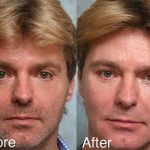
The hype surrounding microcurrent facial sculpting machines with unrealistic before and after pictures are equally misleading.  Typically these before and after pictures show a loose neck and jowls next to a youthful and sculpted jawline and neck.  These pictures could show the same person, but it is unlikely the differences were the result of microcurrent facial sculpting.  The smooth, wrinkle-free neck is most likely the result of a little Photoshop magic and lighting, not microcurrent.  These treatments offer empty promises.   The treatment does not compare to a facelift or nonsurgical facial fillers.

About Dr. Steinsapir

Dr. Steinsapir is a board certified eye surgeon and fellowship-trained in oculoplastic surgery and cosmetic surgery in Los Angeles where he specializes in balanced facial cosmetic surgery for natural results, with an emphasis on minimally invasive techniques, fast recovery time, and leadership in medical technology. Dr. Steinsapir has a private practice and also serves as an Associate Clinical Professor of Ophthalmology at the Jules Stein Eye Institute, at the David Geffen School of Medicine at UCLA. Contact us today to learn how Dr. Steinsapir’s experience and training make him an expert in cosmetic surgery, which can be a vital part of your evidence-based treatment plan.

Services described may be “off-label” and lack FDA approval. This article is informational and does not constitute an advertisement for off-label treatment. No services should be provided without a good faith examination by a licensed physician and an informed consent with a discussion of risks, benefits, alternatives, and the likelihood of treatment success. Only you and your treating physician or surgeon can determine if a treatment is right for you.

July 7, 2011

What’s the Best Eye Wrinkle Treatment?

Eye wrinkles are treatable, but not unavoidable.  There is no cure for aging and therefore, no cure for wrinkles, especially around the eyes―our most expressive feature.    However, you can take preventative measures to delay and even reduce the appearance of wrinkles.  There’s no magic cure, but using sunscreen on a daily basis and wearing sunglasses are an excellent way to limit the effect of sun damage and squinting, which are thought to play important roles in the development of periocular wrinkles. It is generally thought that smoking also damages the delicate elastin in the skin speeding the development and severity of facial wrinkles.   Once these wrinkles do appear you will need more than a skin moisturizer to help improve these lines.

Fillers and Muscle-relaxers

Treatments like BOTOX®, Dysport®, and Restylane® are popular because they are noninvasive treatments that can smooth wrinkles, relax tense muscles, and fill in hollow areas.  These injections are not permanent and will wear off.  Touch-up or maintenance treatment is repeated as necessary.  This is typically twice a year for the botox service and commonly a year for the filler service.

BOTOX and Dysport are naturally-occurring protein that prevents treatment muscles of facial expression from contracting, and Restylane is made from a naturally occurring sugar-gel that is found in the body.  Both of these products are eventually organically broken down and expelled from your body completely primarily in the form of water and CO2.  You’ll notice as this happens that your wrinkles will slowly return.  They may stand out to you after many months of looking much better.  When should you be retreated?  Dr. Steinsapir does not believe that your next treatment needs to occur more frequently than once a year.

Can BOTOX and Restylane prevent problems?

We know that BOTOX and Dysport does not aggravate wrinkles or make them worse in the long run.  We also know that the face is subject to gravity and general usage as we age, and that wrinkles can be caused by tense muscles.  When these overactive muscles relax, as they do in response to BOTOX and Dysport, the skin is no longer constantly creased.  While there are no clinical studies suggesting that ongoing treatment with these agents prevent wrinkles from forming, it does make sense that less skin creasing should help preserve skin integrity and reduce the formation of lines and wrinkles.

About Dr. Steinsapir

Dr. Steinsapir trained alongside the inventor of BOTOX and has performed thousands of BOTOX treatments in Los Angeles since 1988 and recently patented his Microdroplet BOTOX technique. He is a board certified eye surgeon and fellowship trained in oculoplastic surgery and cosmetic surgery in Southern California where he specializes in balanced facial cosmetic surgery for natural results, with an emphasis on minimally invasive techniques, fast recovery time, and leadership in medical technology.  Contact us today to learn how Dr. Steinsapir’s experience and training make him an expert in BOTOX, which can be a vital part of your evidence-based treatment plan.

Services described may be “off-label” and lack FDA approval. This article is informational and does not constitute an advertisement for off-label treatment.  No services should be provided without a good faith examination by a licensed physician and an informed consent with a discussion of risks, benefits, alternatives, and the likelihood of treatment success.  Only you and your treating physician or surgeon can determine if a treatment is right for you.

March 28, 2011

I had Restylane service 6 months ago and still have lumps. Can anything be done about this?

Restylane is a long-lasting but not permanent facial filler that is especially suitable for improving facial contours due to its natural-looking results, even in sensitive areas like dark circles under the eyes, and offers the ability to modify your results in the few cases when treatment isn’t completely satisfactory.  The enzyme hyaluronidase makes Restylane injections easily adjustable to a more desired aesthetic, and your doctor can even erase the treatment completely if you determine together that this is your best option.

When we hear from individuals who had dissatisfactory Restylane service long in the past, what is most disconcerting is that the individual was not aware that they could seek a simple adjustment from the start, or that they were not comfortable returning to their original cosmetic surgeon for this procedure.  This may indicate a problem in communication between the provider and the individual receiving services—and while this could simply be a lack of personality compatibility, it’s crucial that you are comfortable openly talking with your doctor about your treatment and any concerns that may arise.

Seeking the Best Restylane Services

While Restylane is considered a safe and routine procedure enjoyed by many who experience its benefits, this does not at all indicate that providing Restylane is an unskilled task.  You should always seek treatment from a leading and qualified provider such as Dr. Steinsapir, who is a cosmetic surgeon and oculoplastic surgeon with a major specialization of his practice being Restylane, including under-eye Restylane.  Your doctor must understand the subtleties of safely placing Restylane for natural results as well as how to adjust it should you have the need, and he or she must understand how Restylane and your facial anatomy interact to a level that could be called an art form.  Your doctor must also understand how to seamlessly adjust your Restylane treatment through comfortable hyaluronidase treatment.

Modifying Your Restylane Results

In the event that you experience lumps or unwanted effects from your Restylane treatment, hyaluronidase makes it easy to adjust hyaluronic acid fillers like Restylane, Juvederm and Perlane.  In most cases its best to return to your original doctor who should be eager to make sure you are happy with your treatment and outcomes.  However, if you are concerned about the skill level of your original provider who may not have specialized in facial fillers, or if you are experiencing a breakdown in communication and lack confidence seeking further direction and treatment from this individual, then you may wish to consider seeking a second opinion.

Dr. Steinsapir often sees individuals dissatisfied with treatment received elsewhere, and in many cases he can help you to restore the relationship with your original doctor.  If this is not possible, then you can seek adjustment and further treatments from someone else like Dr. Steinsapir.  It’s very important that you are comfortable with these decisions and are empowered with knowledge and a good communication rapport with your doctor to ensure best results.  If you have been waiting as long as six months to find out if your experience with Restylane is normal and if you can have your results adjusted, we are sorry to hear that you have been needlessly stressed.  Fortunately, Restylane can be adjusted and you may learn that when your treatment is customized and delivered with great skill and precision, impressive results are possible.

About Dr. Steinsapir

Dr. Steinsapir is a much sought after oculofacial surgeon.  He is an innovator in minimally invasive cosmetic and reconstructive procedures and has invented new methods for treating with BOTOX, Fillers and cutting edge reconstructive eyelid  and midface surgery.  He specializes in high precision eyelid surgery and is a leader in correcting prior facial and eyelid surgery, including multiple revised cosmetic eyelid reconstructions.  He attended medical school at the UCLA and completed ophthalmology residency at The University of Chicago.  He is multiple fellowship trained including three years of fellowship training in oculofacial plastic surgery at UCLA, and a two-year cosmetic surgery fellowship in Rancho Mirage.  He is widely published and lectures to other surgeons nationally and internationally.  He is an associate clinical professor of Ophthalmic Plastic and Reconstructive Surgery at the Jules Stein Eye Institute at UCLA.  His private practice is located in West Los Angeles, immediately serving the Los Angeles and Bevery Hills communities.  Additionally, individuals from all over the country and the world regularly come to Los Angeles for this expert care.

To learn more about Dr. Steinsapir’s specialization in Restylane treatments, please contact us today.

March 4, 2011

Micro Needling and the Need for Science-Based Treatments

Micro needling, also called skin needling, is a recent trend in cosmetic treatment marketing that sounds miraculous in promotional media but unfortunately is not backed by science or medicine.  Does it work?  We can’t say for sure without extensive research on micro needling, and it’s important to understand that not everybody responds to a treatment in the same way.  But we can say from simple human experience that most products that sound too good to be true often are, especially when they aren’t supported by science, research findings, or promising new approaches that are grounded in established knowledge.

So what is micro needling?  In this treatment you use numbing cream and a roller to puncture hundreds of tiny holes in your skin.  Some claim that this can cure everything from wrinkles to scars to hair loss to unwanted fat.  These claims remain unproven.  Given the different causes of problems as diverse as too much cellulite and too little hair, it seems strange that one procedure says it can address all this and more.  With medicine doctors typically approach the cause of a problem to effectively address it, which is why Dr. Steinsapir only provides evidence-based treatments.  “Cure-alls” may be cleverly marketed, but most often we find that they don’t make sense, aren’t supported by evidence, may rely on dishonest marketing techniques like camera tricks, and are often expensive without delivering on their promises.

Seeking Proven Treatments for Reliable Results

For reliable results and the most return on your financial and emotional investment, we advise you to find an experienced cosmetic surgeon who can help educate you on scientifically grounded treatment options and customize the best individual treatment plan for your unique situation.  Dr. Steinsapir is highly experienced in providing and perfecting established cosmetic treatments like BOTOX and surgeries like the facelift, while also taking leadership in improving cosmetic treatment options, as demonstrated by his work with carved ePTFE orbital rim implants in the midface lift, chemical peel advances, Restylane for dark circles, and Microdroplet BOTOX.  You cannot know which treatment option is best for you until you consult with a doctor specializing in facial cosmetic procedures.  Whichever treatment route you and your cosmetic surgeon ultimately feel is best for you, it should be custom-designed and based on evidence backed by research.

About Dr. Steinsapir

Dr. Steinsapir is board certified in Ophthalmology and has completed numerous fellowships, including three years of Orbit and Eyelid fellowships at the prestigious Jules Stein Eye Institute at the David Geffen School of Medicine at UCLA and a separate two year cosmetic surgery fellowship under the auspices of the American Board of Cosmetic Surgery.  He is widely respected for his work and has published over thirty scientific papers and eight book chapters.   He is a true innovator, having developed Microdroplet™ BOTOX®, a unique patented method for injecting BOTOX®, Deepfillunder-eye Restylane® treatment to address the dark circle and under-eye hollow for up to a year without the need for retreatment.  Dr. Steinsapir is one of the foremost eyelid surgeons in the world.  He is on staff at the UCLA Hospital and Medical Center where he is an Associate Clinical Professor of Ophthalmology at the Jules Stein Eye Institute.  He is also on staff at Harbor/UCLA Medical Center where he serves as an attending surgeon.  He is in practice in West Los Angeles and is in high demand by discerning individuals from Los Angeles, Beverly Hills, and Southern California.  Many of his patients also come to see him from around the country and the world. Very few doctors offer the level of skill and expertise he brings to cosmetic surgery and aesthetic restorative surgery to address prior unsatisfactory eyelid surgery.  Please contact us today to learn more about evidence-based treatment options with Dr. Steinsapir for proven results.

February 27, 2011

Can I exercise my facial muscle for an improved tone?

Exercise and diet are essential for a healthy lifestyle, but it’s important to recognize their limitations.  Not every condition can be cured by exercise, vitamin supplements or fad diets, especially when the problem is not a result of poor nutrition or inactivity.  We absolutely encourage you to exercise moderately and eat well, but we admit to being skeptical of the arising claim that exercising facial muscles can restore youth and beauty to one’s face.  This is an unproven method, and when one considers that they are likely still using their facial muscles just as much as they were ten years ago, it becomes apparent that their aging looks are unlikely due to facial inactivity.

It’s appealing to believe that we can resolve all of our concerns through exercise, and while research shows that exercise does benefit our health in many ways, it also shows that further medical treatment is required for many conditions.  Just as someone with presbyopia cannot exercise to regain the ability to focus for reading vision, it’s not likely that you’ll be able to reverse the effects of age, time, gravity, and stress by wiggling your face or by having electrical currents stimulate your facial muscle to contract.

There are many types of facial cosmetic surgery and other treatment that can help you obtain the result you need if your doctor determines that you are a suitable candidate.  These range from minimally invasive treatments with little-to-no downtime like BOTOX and undereye Restylane to surgeries like the facelift and plastic eyelid surgery including eyelid reconstruction, which give dramatic yet natural results to individuals with far-reaching concerns.  While it is impossible to know which treatment, if any, is most suitable for you before a private consultation with the best facial cosmetic surgeon for you, you can be confident that there are a wide range of treatments that an expert can custom-tailor to meet your needs.

As a specialist in facial cosmetic treatments, Dr. Steinsapir has treated many individuals who first explored a variety of “natural solutions” for their aesthetic facial concerns.  Frustrated when they saw no results, they eventually consulted with Dr. Steinsapir and opted for proven treatment methods that provide dramatic yet natural results.  This human tendency to pursue unproven treatments is not a fault; it is normal to want to independently resolve a problem using the least invasive and most economical method possible.

Dr. Steinsapir is focused on your personal goals and comfort level.  Dr. Steinsapir always asks you questions about your specific goals, individual situation, and preferences so that he can plan a solution that is aligned what you want, so you can feel comfortable knowing that you are ultimately in control of your treatment plan.  Dr. Steinsapir very much believes in using the least invasive method for accomplishing a particular goal; for example, he does not recommend a forehead lift when a BOTOX treatment for wrinkles will will meet your goals – and he is a leader in his field of minimally invasive solutions.

If you are seeking a proven treatment with an experienced facial plastic surgeon with extensive training in oculofacial plastic surgery, we invite you to a personal consultation with Dr. Steinsapir today.  Dr. Steinsapir is honest, friendly, and can talk to you about customized treatments that give you the results you seek by addressing your specific needs and unique facial features.  Please call us today to schedule a time when you can speak with Dr. Steinsapir.

About Dr. Steinsapir

Dr. Steinsapir is a board certified cosmetic surgeon and oculoplastic surgeon in Los Angeles where he specializes in balanced facial cosmetic surgery for natural results, with an emphasis on minimally invasive techniques, fast recovery time, and leadership in medical technology.  Dr. Steinsapir has a private practice and also serves patients at UCLA, where he is an assistant
clinical professor. Contact us today to learn how Dr. Steinsapir’s experience and training make him an expert provider of facial cosmetic surgery and eyelid reconstruction, which can be a vital part of your evidence-based treatment plan.

February 24, 2011

Blepharoplasty Reconstruction

Blepharoplasty, also known as eyelid surgery or a lidlift, is one of the most common cosmetic surgeries and has a remarkable track record for safety.  Because incisions are made along the creases of the upper eyelid, below the lower lashes, or from the inside of the lower lid, scarring is minimal and relatively hidden.  Complications can occur, even when surgery is performed by experienced surgeons.  Complications that can compromise the outcome of eyelid surgery can include hematoma, infection, or eyelid function problems that result from excessive skin or muscle removal, or motor nerve damage.  When the cosmetic or functional result is unacceptable, reconstructive surgery is needed to address these issues.

Potential Concerns

The traditional approach to upper eyelid surgery has been to aggressively remove skin, muscle, and fat.  The result of this outdated philosophy is “the surgical look” with a high sulcus and no upper-eyelid fold.  While some are happy with the cleaned-up appearance created by this type of surgery, a certain percentage of individuals are unhappy with the alterations caused by their changed appearance.  Unfortunately restoring the upper eyelid fold is virtually impossible.  Fillers can help soften the appearance, but restoration of the upper eyelid is not feasible as it is with repair of the lower eyelid.

Other upper eyelid issues are more amenable to corrections.  One such concern is laxity of the skin in the upper eyelid, below the upper eyelid crease.  The skin takes on a crepe appearance.  Crepe skin appears thin and dry and doesn’t hold makeup.   This can be corrected with a precision anchor blepharoplasty.

The indiscriminate removal of skin, muscle, and fat can have more serious complications than just the “surgical look.”  Over-aggressive cosmetic surgery can, result in damage to the muscles that allow the eyelid to close, shortening the upper eyelid and preventing the eye from closing.  The lower lid can also become retracted, pulling the lower lid downward.  Often, individuals come to Dr. Steinsapir with unique issues that require unique surgical solutions.  While there are complications that can’t be fully corrected, many of these issues can be improved functionally and cosmetically by a very limited number of specialized eyelid surgeons who offer these types of reconstructions.  The process starts with a detailed personal consultation.

About Dr. Steinsapir

Dr. Steinsapir is a much sought after oculofacial surgeon.  He is an innovator in minimally invasive cosmetic and reconstructive procedures and has invented new methods for treating with BOTOX, Fillers and cutting edge reconstructive eyelid  and midface surgery.  He specializes in high precision eyelid surgery and is a leader in correcting prior facial and eyelid surgery, including multiple revised cosmetic eyelid reconstructions.  He attended medical school at the UCLA and completed ophthalmology residency at The University of Chicago.  He is multiple fellowship trained including three years of fellowship training in oculofacial plastic surgery at UCLA, and a two-year cosmetic surgery fellowship in Rancho Mirage.  He is widely published and lectures to other surgeons nationally and internationally.  He is an associate clinical professor of Ophthalmic Plastic and Reconstructive Surgery at the Jules Stein Eye Institute at UCLA.  His private practice is located in West Los Angeles, immediately serving the Los Angeles and Bevery Hills communities.  Additionally, individuals from all over the country and the world regularly come to Los Angeles for this expert care.

February 13, 2011

I had a chin implant in the past. What are my options for improving my appearance now?

There are many different styles of chin implants that vary from the old-style button-chin implants to oversized, so-called anatomic implants. The differences range from attachment method, material, size and shape. Whether your implant is porous silicon, held in place by your own tissue or secured via bone screws, the results are a balanced appearance and striking silhouette. Mentoplasty provides a look of youth and vigor, but as you age, the appearance of your implant can change. As we age, our faces naturally lose the sub dermal fat that contributes to the shape and volume of our facial features. With the inevitable loss of facial volume and the natural changes we all face as we age, the contours of your chin implant can become increasingly evident. Cosmetic surgery can have long-lasting benefits, but it can’t stop the clock—you may find that as you gradually see the benefits of a past chin implant fade, with the gradual loss of soft tissue volume.  This progressive change over time compromises the silhouette that was originally achieved by the implant.

Maintaining the shape of your chin

A variety of methods can address the loss of facial volume and prominent chin implant contours based on the individual and their concerns. For some, Dr. Steinsapir may recommend removal and replacement of the original implant as the most appropriate treatment. By replacing the original implant with a different type or style of implant, the effects of aging can be reversed without sacrificing your appearance and facial shape. By replacing an older implant with a newer model and style that reflect medical advances in facial cosmetic surgery, the proportions of your face are restored to a more youthful appearance.

Minimally invasive methods

For some individuals, chin irregularity associated with the loss of natural facial volume can occur. If you’re beginning to experience this particular result of aging, you don’t need to have a chin implant to improve your appearance, you may benefit from injections of BOTOX® and hyaluronic acid fillers. Injections with facial fillers do not require surgery and last well over a year.  This is an excellent option for many individuals who do not wish to have surgery or a revisional procedure to replace a prior chin implant.  Revolumizing the chin, without changing the implant is a highly effective solution.  Fat grafting can provide a natural appearance and is an excellent option for some individuals. However, given the option most people are now choosing hyaluronic acid fillers like Perlane as a means of rapidly improving the appearance of the chin.

About Dr. Steinsapir

Dr. Steinsapir is a much sought after oculofacial cosmetic surgeon.  He is an innovator in minimally invasive cosmetic procedures and has invented new methods for treating with BOTOX, Fillers and cutting edge facial surgery.  He specializes in high precision eyelid surgery and is a leader in correcting prior facial and eyelid surgery.  He attended medical school at the UCLA and completed ophthalmology residency at The University of Chicago.  He is multiple fellowship trained including three years of fellowship training in oculofacial plastic surgery at UCLA, and a two year cosmetic surgery fellowship in Rancho Mirage.  He is widely published and lectures to other surgeons nationally and internationally.  He is an associate clinical professor of Ophthalmic Plastic and Reconstructive Surgery at the Jules Stein Eye Institute at UCLA.  His private practice is located in West Los Angeles, immediately serving the Los Angeles and Bevery Hills communities.  Additionally, individuals from all over the country and the world regularly come to Los Angeles for this expert care  Please contact us today to learn more about how Dr. Steinsapir can help you attain your aesthetic goals.

February 8, 2011

Is it a good idea to freeze fat for later use?

One of the reasons fat grafting can be both useful and so safe is because these cosmetic procedures rely on your own tissue and, as your exact biological match, so no risk of an allergic reaction or rejection of the cells placed.  This facial filler is literally your own fat cells.

Fat is a living graft.  The harvested fat cells are placed where they need to be in order to rejuvenate your features through facial volume restoration.   Fat transfer to the face is clinically successful because approximately 60% to 70% of the fat that is grafted survives, creating meaningful results in areas like the midface.

Effective fat transfer treatment relies on the grafting of living fat.  Like other living things, the fat cells used in fat transfers have a lifespan, can be damaged, and will eventually die.  The primary problem with freezing fat for later use is that the fat’s life is not easily preserved, which means your treatment will not be as effective next time.

Why doesn’t freezing fat work very well?

When your cosmetic surgeon harvests fat for your treatment, he or she will obtain it from another part of your body, essentially performing a mini liposuction on that area.  It’s very appealing to harvest extra fat for later use, because theoretically you can initially have a more comprehensive liposuction procedure, and then save this fat to top off your filler sometime in the future – in other words, you’d get the added cosmetic benefit of liposuction now and then cut a step out of your treatment later.  Unfortunately, cutting corners often leads to problems, and this example is no exception.

You have heard of fertility doctors and researchers freezing eggs, so it’s tempting to assume that you can just plop your harvested fat cells into a freezer and come back to them in a few months or years.  In this case, the egg is preserved using very special tissue techniques that enable a high percentage (but not all) of the eggs to survive.  Much of the fat, on the other hand, dies once it is frozen.  As we discussed above, successful fat transfer results relies on the viable fat cells that survive transfer.

If your facial cosmetic surgeon were to freeze your fat for later use and then place it during your later treatment, you would ultimately have disappointing results.  Immediately after the treatment, you would have some swelling caused by the injection and the added volume, just as occurred during your original fat grafting procedure.  However, this time the results would be disappointing, because the body will work to remove the dead fat cells, and a vast proportion of them will have not survived.  Since great results depends on the transfer of your living cells, with fewer alive you will have less satisfaction in the outcome.  Because of the inflammation associated with the body removing the dead fat cells, swelling is the main reason you might think the procedure was initially successful and then over the course of weeks, this swelling disappears.

Additionally, you should consider that a surgeon who offers to store fat is running an unlicensed tissue bank.  Licensed tissue banks have very tightly controlled procedures, specialized equipment, expertise, and backup procedures.  How do you know you are getting your own fat back, what steps were taken to reduce the risk of cross-contamination?  Do they screen for Hepatitis and HIV?  Before jumping on board with a surgeon who says he or she can save your fat for later, you need to find out if your doctor has the appropriate licensing and background needed to perform these additional medical tasks.  But you should also question whether freezing fat for later is a good practice to begin with.

Best Practices for Best Results

Given these reasons, it is no wonder that freezing fat for later use has been questioned by respected medical authorities.   Time-tested experience and clinical studies have shown that harvesting fresh fat yields the best possible results.  When it comes to things as important as your health and appearance, it never pays to take shortcuts.  At worst, to do so would be a gamble and a risk; at best, the shortcut would bring dissatisfactory results and you’ll need to redo your treatment the right way.

The evidence-based placement of fillers for the face like Restylane and natural fat transfers are an excellent option for many individuals who are dissatisfied with their deficiencies in facial volumes.  If you are concerned and wonder if a fat transfer or another service might benefit you, consider how a specialized physician in facial fillers and treatments can help.

Dr. Steinsapir studied at the David Geffen School of Medicine at UCLA as well as at the University of Chicago, and he is trained in both cosmetic and oculofacial surgery.  His philosophy is to build customized aesthetic solutions for individuals that enhance the face’s natural beauty with balanced results through minimally invasive practices.  To learn more about safe and effective fat transfers and other facial concerns, contact us today to schedule your risk-free consultation.

December 17, 2010

Could I be allergic to Restylane?

Restylane is one of the most popular facial fillers and rightly so, because it is safe, has proven results, and is easy to adjust in case your treatment needs this for any reason.  However, please remember that even the safest medical treatments come with some risk, and there is a very small chance you could be allergic to Restylane.  The key to your positive treatment experience will be in finding the best cosmetic surgeon for you who is a specialist in facial fillers.  Be completely open and honest about your medical history with him or her, and together you can make treatment decisions that minimize your risk.

What is Restylane?
Restylane is a hyaluronic acid filler that is often used to improve deficiencies in facial tissue and dark circles under the eyes.  Technically speaking, hyaluronic acid is a carbohydrate polymer (or in lay terms, a sugar gel) already found throughout our bodies in the fluid of our joints.
Restylane is a sugar gel that is cross-linked to make it last much longer in the body, which is why you can see benefits for about a year.  Restylane is usually the top choice for correcting undereye circles, facial wrinkles, and volume problems in the nasolabial fold and lips.

Reactions Are Rare But Possible
It is rare to have an allergy to a hyaluronic filler, but it is possible.  Fortunately, the incidence of an allergic reaction to Restylane is so unusual that no testing is recommended before your treatment.  It is your responsibility to be completely open about your medical history, any current conditions you may have, and allergies in your family.  There are a few cases in which you should be very cautious; for example, if you’ve had a reaction to something that has some shared components of Restylane, be sure to let your cosmetic surgeon know.

Also be mindful that having no allergic reaction to one hyaluronic filler does not guarantee that you’ll have no reaction to another hyaluronic filler, such as Juvederm.  These are related products but not identical, so consider the risk individually.  However, if you have already shown an allergic reaction to one hyaluronic filler, you will likely be allergic to another.  Given how rare the incidence of these allergies are, it’s considered safe to predict that you’ll have no allergy, but please take responsibility in recognizing the small risk exists.

Obtaining the Safest Treatment
If you are dissatisfied with certain aspects of your facial features, find out if Restylane is right for you.  Treatment with safe Restylane injections improves the appearance and confidence of countless people everyday, and if you have concerns like dark circles, wrinkles, or lack of facial volume, Restylane may help.

Dr. Steinsapir
is a leading Restylane provider and experienced cosmetic surgeon in Beverly Hills and Los Angeles, where he specializes in facial fillers and minimally invasive cosmetic treatments to improve your facial aesthetic.  He is the inventor of Deepfill Restylane, a world-renowned method of correcting dark circles under the eyes, and he has also served as a physician consultant to the manufacturer of Restylane and Perlane.  To learn more about how Dr. Steinsapir can custom-tailor a treatment to your unique needs, please contact us today.

December 13, 2010

Could I be allergic to Juvederm?

Just as it’s possible but rare to have an allergic reaction to Restylane as we recently discussed, it is also possible but rare to have an allergic reaction to Juvederm.  Why do we mention both Restylane and Juvederm here?  These facial fillers are each hyaluronic acid fillers, so they share properties that make them both very safe; however, in the unlikely event that you are allergic to one, then you are probably allergic to the other.  Whenever you consider undergoing any medical procedure, you should be mindful that there is always some degree of risk involved.  This is why it’s especially important to have an open conversation with your doctor about your circumstances and medical history to best determine whether you are one of the many people who can benefit from facial fillers.

If you have a history of any of the following, carefully discuss them with your doctor, as they indicate that Juvederm is probably not right for you, and instead you should consider one of other safe treatment options.  According to the Juvederm webpage, you should not use Juvederm injectable gel if you have:

•    Severe allergies with anaphylaxis
•    Allergies to gram-positive bacterial proteins
•    Allergies to lidocaine

Allergic reactions to Juvederm are so rare that no testing is recommended prior to treatment, but remember rare events do happen.  The best thing to do is consider the benefits against your personal risk factors.  The good news is, hyaluronic acid fillers like Juvederm are safe for the overwhelming majority of people.

Thinking about the Best Filler for You
Juvederm was the first hyaluronic acid dermal filler to be approved by the FDA for addressing facial folds, lines, and volume deficiencies.  It remains an excellent product to this day.  However, we’ve found that Restylane’s flow characteristics usually make it more suitable for certain facial treatments such as treating dark circles under the eyes.  This is because Restylane’s higher viscosity (basically its “thickness”) helps to keep the filler correctly placed around the undereye area.  Both Juvederm and Restylane are readily adjustable by your cosmetic surgeon, both last about the same amount of time, and both are considered safe products.  The key is in determining which cosmetic approach is best for your individual needs and then receiving a customized treatment.

Expert Consulting in Facial Fillers
If you are seeking to improve your looks and build confidence by treating facial concerns like wrinkles, hollowness, folds, and dark circles, consider how treatment with a hyaluronic acid filler or another procedure like the midface lift may help.  The only way to find out what is the best and safest treatment for you is to consult with a highly experienced and qualified doctor who can go over your medical history and current needs with you in detail, then custom-plan a treatment approach that meets your goals.  Dr. Steinsapir is a world leader in facial filler treatments, with an emphasis on minimally invasive technique that look completely natural.  To start thinking about the best way to achieve you desired aesthetic, contact us today for your no-risk consultation.

Pages:123»