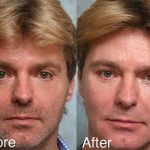
When you undergo upper blepharoplasty, eye tuck, eye job, eye lift, or lidlift surgery, your surgeon removes excess skin and sculpts fatty tissue that creates the appearance of droopy, deflated eyelids. Certain eyelid structures may also be tightened as part of your surgery. As the fat deposits, loose skin, and drooping of the eyelids typically occur due to aging, this procedure serves to restore a more youthful, refreshed, and rested appearance.
Because it is a versatile procedure, upper eyelid surgery can also accomplish other goals, such as creating an upper eyelid crease, opening heavy eyes, improving lash ptosis, and smoothing the skin of the eyelid platform making it more suitable for makeup. In addition, the upper eyelid lift procedure effectively leads to a reduction in skin tissue above the eye, allowing for better peripheral vision for some individuals.
Where is surgery performed and what type of anesthesia will my surgeon use?
Some doctors, like Dr. Steinsapir, maintain a dedicated procedure suite in his or her office and for healthy patients, many eyelid surgeries can be performed under local anesthesia in the office setting. Others need to have surgery in a surgery center and this is typically done at a center or the outpatient wing of a larger hospital facility. Dr. Steinsapir often brings his patients who need this level of service to the Surgery Center at The Ronald Regan UCLA Medical Center. The location of your procedure varies based on the resources available to your surgeon and your unique health needs.
Eyelid surgery is very comfortable and most procedures are easily performed under local anesthesia with or without intravenous sedation. Dr. Steinsapir advises against having eyelid surgery under general anesthesia. To get the best possible result it is essential that the eyes can open and close to command during surgery. If you are asleep, this is impossible and the surgical results will be compromised. As an alternative, Dr. Steinsapir recommends having surgery under intravenous sedation where the anesthesiologist controls the level of sedation. You would be minimally aware but still able to cooperate during surgery. Because of the drugs used, you may not form memories of the surgery and yet you are able to cooperate during surgery, which is ideal.
What are the physical restrictions following surgery?
Before you undergo surgery, a reputable oculoplastic surgeon will ask about your medical history and perform a detail examination of the eyes and eyelids to ascertain your risk level and special considerations. If you must be on a medication like Plavix or aspirin for medical reasons to thin your blood, your surgeon may advise you that you are not a candidate for cosmetic eyelid surgery, or may recommend a less extensive eyelid surgery.
During the first part of your recovery, you will need to take it easy, avoid bending over, and immediately call your surgeon should you experience any pain, bleeding, or impaired vision after surgery. After 24 hours, Dr. Steinsapir will encourage you to go for a walk. Bruising and swelling are normal after surgery. However, many find that large sunglasses hide these bruises making shopping possible even in the first week after surgery. Most people take a full week off from work. However, many find that within a day of surgery, they are able to handle phone calls and email without a problem. It will be about 10 days before most people may not notice that you just had something done. We generally advise people to wait about this long before going back to the gym. However, because workouts vary so much, it is best to discuss your workout with your surgeon to get advice that is tailored to your particular workout. When you see your cosmetic surgeon, he or she will go over your pre-op and recovery plans in depth, giving you instructions and making sure you have the opportunity to ask all of your questions.
What are some complications from surgery and how they are addressed?
If anyone tells you that you can’t go blind from eyelid surgery like blepharoplasty, they aren’t being honest with you. The truth is, while this is an extremely rare complication, there is a risk of blindness from eyelid surgery. Of course no doctor thinks this will happen to them, but the best oculoplastic surgeon will acknowledge it’s a possibility, be honest with you about this, and take precautions to minimize the risk as much as possible.
Loss of vision after eyelid surgery is general due to bleeding behind the eye called a retrobulbar hemorrhage. If someone tells you that they have never this type of problem after eyelid surgery, then they probably have not seen enough cases, or simply lack adequate training in eyelid surgery. Avoiding medications and herbal products that thin the blood, like aspirin and Ginko help reduce this risk.
Your doctor will have you avoid blood-thinning medications to significantly decrease the already-low risk of retrobulbar hemorrhage. This means that, with the consent of your general practitioner or family doctor, you won’t be able to take certain prescription medications as well as over-the-counter medications like Aspirin, Ibuprofen, Advil, and Motrin. You will also need to abstain from most herbal products for a while. If you have been prescribed a medication by a physician specifically for the purpose of reducing the risk of clotting, such as Plavix, coumadin, or aspirin, do not stop these medications on your own. This needs to be done under direct medical supervision. In some circumstances, your doctors may decide that these medications cannot be stopped and this will have a bearing on going forward with elective eyelid surgery.
Other issues may be more common but are less serious. Dry eye after eyelid surgery is very common. This is typically because your eyes were on the dry side before surgery and eyelid swelling makes this a bit worse. As the swelling settles down, typically the dry eye symptoms settle down to what they were before surgery. Some complications are very specific to the type of eyelid surgery you are considering. For this reason, it is incumbent upon your surgeon to discuss these possibilities with you at the time of consultation. If they spend 5 minutes with you, you are being short changed of this discussion. A detailed surgical consultation appropriate for eyelid surgery can last an hour or more.
What is the time frame before full recovery?
Generally the bruising and swelling that is common after eyelid surgery rapidly diminishes. Most people are comfortable returning to work and social activities within seven to ten days following surgery. Complying all your surgeon’s post-op care procedures will ensure your recovery is as swift as possible. Generally it is about 8 weeks before the swelling in the eyelids won’t be obvious to you when you look in the mirror.
About Dr. Steinsapir
Dr. Steinsapir is a board certified eye surgeon and fellowship-trained in oculoplastic surgery and cosmetic surgery in Los Angeles where he specializes in balanced facial cosmetic surgery for natural results, with an emphasis on minimally invasive techniques, fast recovery time, and leadership in medical technology. Dr. Steinsapir has a private practice and also serves as an Associate Clinical Professor of Ophthalmology at the Jules Stein Eye Institute, at the David Geffen School of Medicine at UCLA. Contact us today to learn how Dr. Steinsapir’s experience and training make him an expert in cosmetic surgery, which can be a vital part of your evidence-based treatment plan.
Services described may be “off-label” and lack FDA approval. This article is informational and does not constitute an advertisement for off-label treatment. No services should be provided without a good faith examination by a licensed physician and an informed consent with a discussion of risks, benefits, alternatives, and the likelihood of treatment success. Only you and your treating physician or surgeon can determine if a treatment is right for you.