October 27, 2011

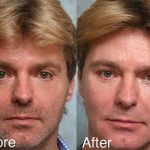
Upper blepharoplasty made my eyelids heavier and the skin wrinkled. What is going on?

Dr. Steinsapir specializes in fixing unsatisfactory eyelid surgery.  As a fellowship trained oculoplastic and cosmetic surgeon, and a board certified ophthalmologist, Dr. Steinsapir is experienced in working closely with his patients to create a personalized treatment plan.  If you are experiencing eyelid ptosis and crepey (wrinkled) skin following upper blepharoplasty, it may be that your original surgeon did not have the proper experience to successfully perform your upper blepharoplasty.

Crepey Skin

When performing upper blepharoplasty, simply removing extra skin is not enough to create a desirable outcome.  Successful blepharoplasty requires what Dr. Steinsapir calls a ‘structured’ blepharoplasty.  It is essential to properly support the upper eyelid skin to avoid crepey upper eyelid―platform skin that simply won’t hold makeup.  To correct this problem, your surgeon will need to remove skin from below the upper eyelid crease and anchor the eyelid platform skin and underlying muscle to the levator tendon, which raises the upper eyelid.  This places the upper eyelid skin on a slight stretch resulting in a smooth platform for makeup.

An experienced and skilled surgeon can address crepey upper eyelid skin after unsatisfactory upper blepharoplasty with a carefully planned excision of the excess skin left on the eyelid platform.  With the eyelid open, the upper eyelid skin is anchored to the levator tendon to create a long lasting adhesion to the eyelid elevator.  Recovery is usually somewhat shorter than standard upper blepharoplasty.

An anchor blepharoplasty is an important part of any comprehensive eyelid surgery. This part of your procedure specifically addresses loose skin and drooping eyelashes on the upper eyelid platform.  Excess, wrinkled or loose skin here can give you a tired appearance associated with eyelash ptosis and crepey eyelid platform skin.

While ideally anchor blepharoplasty is a part of every blepharoplasty, unspecialized or less skilled surgeons may not be comfortable offering this important aspect of treatment.  Anchor blepharoplasty is a very technical skill that requires great precision and specialized expertise.  Without great experience, education and an artistic skill, your cosmetic doctor may have difficulty performing an anchor blepharoplasty as part of your upper blepharoplasty; unfortunately, in these cases you may find yourself disappointed after you heal and wish your eyes appeared more alert.

Heavy eyelids

Heavy eyelids following upper blepharoplasty are often the result of a pre-surgical condition that your surgeon failed to address during you consultations.  Before you underwent blepharoplasty, you presumably already had heavy lids and heavy brows.  The brain compensates for the heavy eyebrow by activating the frontalis muscle, the forehead elevator.  The forehead lifts the eyebrow until the skin in the upper eyelid no longer rests on the upper eyelashes.

Clinically, this situation can be detected by looking for lines in the forehead and an abnormally elevated eyebrow.  When upper blepharoplasty is performed in this setting, the excess skin in the upper eyelid is removed. This reduces the amount of forehead muscle activation that is needed to keep the upper eyelid skin off the upper eyelashes.  The forehead relaxes and the eyebrows come down. The net result is that it appears that almost nothing was done surgically.  Of course the forehead is smoother but if the objective was to make the eyes brighter by clearing space above the eyelashes, the net effect can be disappointing.  Under these circumstances the best option is to perform a forehead lift in conjunction with the eyelid surgery.

About Dr. Steinsapir

Dr. Steinsapir is on active staff at the UCLA Hospital and Medical Center at the David Geffen School of Medicine as an associate clinical professor of Ophthalmology in the Division of Orbital and Ophthalmic Plastic Surgery. UCLA is consistently rated the best hospital in the West and ranked at the top with a handful of medical centers in the United States. Many surgeries are performed on an outpatient basis at the Surgery Center at the UCLA Medical Center.  Dr. Steinsapir addresses a broad array of oculofacial reconstructive concerns.  Contact us today to schedule a personal consultation with Dr. Steinsapir.


March 1, 2011

Anchor blepharoplasty and the Asian Eyelid

The benefits of a well-designed and masterfully delivered anchor blepharoplasty help many people feel better about their appearance and confidence level everyday. Is anchor blepharoplasty or another specialized eyelid surgery right for you? This will of course depend on your individual situation and goals, but we have found that a diverse range of individuals can be candidates for seeking improvement through an upper blepharoplasty that includes an anchor blepharoplasty. If you are seeking Asian blepharoplasty for the upper eyelid, an anchor blepharoplasty should be a part of your balanced treatment to ensure natural results.

Asian eyelid surgery before and after

Asian eyelid surgery before and after

What exactly is an anchor blepharoplasty?

An anchor blepharoplasty is an important part of any comprehensive blepharoplasty. This part of your surgery specifically addresses loose skin and drooping eyelashes on the upper eyelid platform. Excess, wrinkled, or loose skin here can give you a tired appearance associated with eyelid ptosis, or sagging eyelids. The anchor blepharoplasty for Asian eyelids restores your
alert, youthful appearance by correcting the tension in the upper eyelid skin and positioning your eyelashes to a more optimal position.

How should my oculoplastic surgeon address my Asian anchor blepharoplasty?

As with any Asian eyelid surgery, when your cosmetic surgeon develops your treatment plan, he or she should customize it to your unique features and understand that the goal is never to “westernize” the eye, but instead to optimize your natural eyelid features to bring out a look that fits you as perfectly as possible. The best blepharoplasty for you will be one that enhances
your individual aesthetic.

Asian eye surgery is a specialized cosmetic surgery that calls for an eye plastic surgeon who has helped many people achieve great Asian eye surgery results by understanding that treatment needs vary on an individual basis. Choose a doctor who has much experience in helping others achieve natural-looking Asian eyelid surgery outcomes.

A Specialized and Technical Skill

While ideally anchor blepharoplasty is a part of every blepharoplasty, unspecialized or less skilled surgeons may not be comfortable offering this important aspect of treatment.  That’s because anchor blepharoplasty is a very technical skill that requires great precision and specialized expertise. Without great experience, education, and an artistic skill, your cosmetic doctor may have difficulty performing an anchor blepharoplasty as part of your upper blepharoplasty; unfortunately, in these cases you find yourself disappointed after you heal and wish your eyes appeared more alert. The proper tension achieved through an expert anchor blepharoplasty is what you need to improve lash ptosis, skin laxity on the eyelid platform and
related problems.

Choosing the Right Surgeon

When you are seeking the best eye plastic surgeon for you, consider who has a reputation of excellence in issues most important to your treatment, like the best Asian eyelid surgery, superior ethics and care, a grounded education and experience base, and a proven ability to achieve natural and balanced results. Make a list of what you seek in a fellowship trained surgeon recognized by the American Society for Ophthalmic Plastic and Reconstructive Surgery and do not settle for any less than the best for your unique situation.

We hope that during your search you will consider how a no-risk consultation with Dr. Steinsapir can give you insight and confidence in your treatment options. Dr. Steinsapir practices minimally invasive facial cosmetic solutions in Los Angeles, with a specialty in Asian eyelid surgery. As a top eye plastic surgeon and leader in this field, Dr. Steinsapir has published many articles and is renowned for his forward-thinking, science-based solutions that result in a natural look and fast healing time. Contact us today to learn more about how Dr. Steinsapir can help you achieve the facial balance you’ve been wanting.

January 17, 2010

Anchor Blepharoplasty: Is It for Me?

Anchor blepharoplasty addresses, loose, crepey skin on the upper eyelid platform by tightening the skin between the upper lashes and upper eyelid crease.  This platform may become loose and sag, giving an unsightly appearance of tired eyes with sagging eyelashes, a form of ptosis.  For women, having skin in this condition makes it very difficult for the eyelid to hold makeup, creating a problem that is difficult to artificially enhance. For both women and men, it can make the eyes look dull.  The discreet nature of the incisions used in an anchor blepharoplasty means that this procedure will not contribute to visible external scarring, nor will it impede your healing process. This safe treatment should be part of every upper blepharoplasty to ensure that the lashes are properly supported.

Cosmetic Anchor Blepharoplasty and Ptosis Repair

Cosmetic Anchor Blepharoplasty and Ptosis Repair

Whether anchor blepharoplasty is for you depends on your candidacy for upper eyelid surgery, as we previously discussed – for example, if you have puffy, sunken, asymmetrical, or tired eyes then you may benefit from an upper blepharoplasty and thus an anchor blepharoplasty.  This is an essential part of correcting upper eyelid problems.

Is this a separate procedure from blepharoplasty?

Ideally, no.  Your surgeon should perform the anchor blepharoplasty as part of your regular upper blepharoplasty to correct tension problems along the eyelash line and ensure that your eyes look bright and lively.  However, performing an anchor blepharoplasty is a highly specialized, technical skill, and it takes the most experienced surgeons to execute this procedure.  If you go to a doctor who does not offer this procedure in conjunction with your blepharoplasty, then you may be setting yourself up for disappointment and possible revisional surgeries.  If your eyes have already healed with droopy lashes and loose skin, then it’s time for a consultation.  It’s always a good idea to find out if your original surgeon can help you resolve this issue.  However, the most common reason it was not performed at the time of the original surgery is that the surgeon lacked the skills necessary to incorporate structurally important element into the eyelid surgery.  If he or she can’t, or you lack confidence in their ability, then seek a second opinion.

The right doctor can easily correct problems with a properly designed anchor blepharoplasty.  Since precision is key to obtaining a great outcome, you should find a surgeon who has performed this procedure numerous times and recognizes its importance.

How long should I wait after surgery to receive a corrective anchor blepharoplasty?

Allow yourself several months to heal before seeking revisional surgery, assuming you’ll still want it when you are close to your final results.  Certainly keep communication open with your doctor so he or she can address your concerns and keep a close eye on your recovery, and it is also fine to seek a second opinion to decide on the best time for another eyelid procedure.  Unless it’s an emergency as we discussed in our last post, you should finish healing before undergoing more procedures in the same area.  This will enable your doctor to correct your eyelid tension with the fewest possible variables that may affect the outcome of your surgery.

I’m ready to talk to a professional about my concerns.

Consulting with an oculoplastic surgeon is the single most helpful action you can take when deciding whether anchor blepharoplasty is right for you.  You’ve done a bit of research, and now you need an examination by an experienced doctor who can accurately diagnose your problem and recommend the best treatment course, or no treatment when none is necessary.  If you haven’t yet had a blepharoplasty, be sure to ask your potential doctor about an anchor blepharoplasty so you love your results the first time.  If you need revision, a consultation will help you determine if an anchor blepharoplasty is ideal for your individual needs.

Dr. Steinsapir considers anchor blepharoplasty a normal part of upper eyelid surgery.  For evidence of his skill and attention to detail, we welcome you to browse his before and after blepharoplasty photos, where you will notice the alert position of the eyelishes and properly tensioned eyelid platform skin.  Dr. Steinsapir is a top eye plastic surgeon in Los Angeles who holds an impressive list of publications, qualifications, trainings, and certifications, including the multiple fellowships he has completed and his professorship at UCLA.  Contact us today to schedule your personal, individualized consultation with Dr. Steinsapir and learn how he can resolve your upper eyelid concerns.