Restylane Details Beverly Hills
Filler Procedure | Filler Case Studies
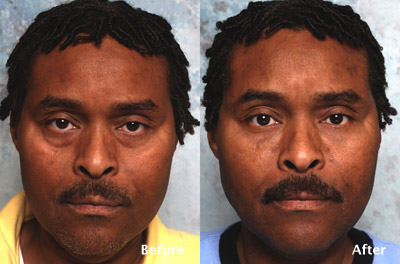
 Restylane is a minimally invasive treatment filler that Dr. Steinsapir uses to treat Dark Circles under the eyes and Under Eye Hollows in Los Angeles. Dark circles under the eyes are one of the most common concerns that bring clients of all ages to consult Dr. Steinsapir in Los Angeles. He is a pioneer of using filler under eyes to treat dark circles. His patent pending and minimally invasive Deepfill™ Restylane® method was developed from insights over decades of mid face cosmetic surgery and the root cause of the under eye dark circle. We encourage you to learn more about his background and then carefully look through the not retouched before and after photographs of his Restylane® patients to understand what his natural approach can do for you.
>> Expertise With Fillers
>> Restylane® Benefits
>> Differentiation
>> Need for a New Treatment Approach
Frequently Asked Questions
Expertise With Fillers
- Deepfill™ Restylane® was developed by world-renowned eyelid plastic surgeon Kenneth D. Steinsapir, M.D.
- Dr. Steinsapir serves as a Physician consultant to Galderma, the distributor of Restylane® and Restylane Lyft®.
- Dr. Steinsapir is one of the top 3% users of Restylane® and Restylane Lyft® in the United States.
- Dr. Steinsapir was an investigator for the Juvederm® JET trial and is widely respected for his published study describing his Deepfill™ method of filler under eyes to correct eye hollows and dark circles.
- Dr. Steinsapir is also a board certified Ophthalmologist and an Associate Clinical Professor of Ophthalmology at the David Geffen School of Medicine at UCLA.
- Dr. Steinsapir is one of a select few in the world who is a board certified ophthalmologist, fellowship trained in both cosmetic and eye plastic surgery and elected as a Fellow to the prestigious American Society of Ophthalmic Plastic and Reconstructive Surgery.
Restylane Benefits
- Deepfill™ Restylane® treats dark circles that appear under the eye and can greatly improve the under eye hollow.
- Restylane® provides a minimally invasive non-permanent treatment that adds volume and smoothness to your skin.
- Many of our current patients consulted Dr. Steinsapir because they were having an issue with a filler service performed elsewhere.
- Dr. Steinsapir has come to prefer Restylane® for under eye treatment to all other fillers because it can be molded to the desired shape and adjusted if there are any lumps or bumps following the procedure. Restylane® is composed of a sugar gel that occurs naturally. The material is extremely well tolerated and lasts in many patients a year or more.
- He is known internationally and is on the teaching faculty at the UCLA Medical Center where he also performs surgery.
Differentiation
- Dr. Steinsapir is one of the few cosmetic surgeons in the world who has made treating dark circles and under eye hollows a major focus of his professional practice.
- Dr. Steinsapir is multi-fellowship trained in both cosmetic surgery and eyelid plastic surgery. Dr. Steinsapir is a board certified Ophthalmologist and an Associate Clinical Professor of Ophthalmology at the prestigious Jules Stein Eye Institute at the David Geffen School of Medicine at UCLA.
- When working around the eye, opt for a specialized eyelid plastic surgeon for this problem rather than a generalist like a board certified general plastic surgeon, dermatologist, or other type of doctor.
- People travel from Los Angeles, California and from all over the world to consult Dr. Steinsapir and benefit from his considerable and innovative technical and artistic skills.
Need for a New Treatment Approach
- Dr. Steinsapir pioneered the vertical midface lift using a hand carved orbital rim implant and is a leading authority on this surgery worldwide. Dr. Steinsapir spent many years perfecting the vertical midface lift, which provides volume along the orbital rim and lifts the cheek soft tissue back into the lower eyelid.
- Dr. Steinsapir recognized that there are people who absolutely need this surgery. However, not everyone is prepared to have surgery. In particular, some individuals who seek him out have been wrecked by prior surgery. Emotional trauma prevents them from having a definitive surgery to address their issues. Therefore, Dr. Steinsapir searched for a practical non-surgical method of addressing dark circles and lower eyelid hollows.
- This led him to develop the Deepfill™ method of filling the under eye hollow with Restylane®. This method is effective in improving lower eyelids with dark circles. Filling this area has a very favorable affect on the skin optics thereby improving the appearance. The key to this method is the deep placement of Restylane® along the orbital rim. This is a very safe location to place the filler. The procedure is surprisingly comfortable. Topical numbing cream is first applied to the lower eyelid skin. The hollow area is then filled with Restylane®.
How much Restylane® do I need under my eyes and how much will the service cost?
How much Restylane® you need very much depends on your facial anatomy. The key is a personal assessment by Dr. Steinsapir. At the time of the visit, Dr. Steinsapir will assess you and tell you the necessary volume. Our best advice is to get full correction.
Most patients with average dark circles need about 1 ml of Restylane® under each eye. However, you may need more or less. When financial considerations are an issue, Dr. Steinsapir will work with you to get the most from the treatment you are able to afford. Before you agree to service, we will be able to give you a precise quote once Dr. Steinsapir has personally assessed you.
Our office believes in providing a very high level of boutique care. All patients are seen and all services are performed by Dr. Steinsapir, who believes in natural results. Dr. Steinsapir approaches each patient as an individual. This means a detailed history, careful listening to individual concerns and developing a plan that works for the individual based on their needs.
How come Dr. Steinsapir does not use permanent filler or fat to fill in the dark circle?
One of the most important things to understand about the under eye circle is how thin the eyelid is in this region. On the cheek, there is more flexibility in the choice of fillers because lumps and bumps can and do hide out in the cheek fat. There is not such a margin for error in the lower eyelid. Therefore it is essential to work with a filler that is easily adjusted after the treatment should this be necessary. Permanent fillers lack this flexibility. For example, surgery may be needed if a lump is seen after treatment with your own fat or a filler like Artefill® or silicone oil. Even fillers like Radiesse® and Sculptra® have been reported to produce irregularities visible at the skin surface making them a less than ideal choice for this particular application.
What does Dr. Steinsapir think of Juvederm®? Why does he prefer Restylane®?
Dr. Steinsapir thinks that Juvederm®, which is also a sugar gel filler, is an excellent product. However, you may be aware from Allergan, Inc. (the company that makes Juvederm®) marketing that it is touted as being “smooth.” Indeed, there are slight flow characteristics that differ between Juvederm® and Restylane®. Dr. Steinsapir finds that the relative “thickness” or viscosity of the Restylane® actually makes it easier to work with for the under eye area. It is Dr. Steinsapir’s personal opinion that the higher viscosity of the Restylane® helps keep the material in place in the tissues of the lower eyelid/cheek interface. In fairness, both materials seem to last about the same amount of time and both can be adjusted if needed at any time after they have been placed.
What does Dr. Steinsapir think of Restylane Lyft®?
Restylane Lyft® is distributed by Galderma, the company responsible for Restylane®. Restylane Lyft® is a thicker material than Restylane® and seems to last a few months longer than Restylane®. This time frame seems to be well over a year, which is amazing. The material is fantastic for volumizing the face including the cheeks, eyebrow, chin, and perioral area. Again, these areas have much more fat to work with than the lower eyelid dark circle. Restylane Lyft® is commonly used in the top of the cheek to compliment the Restylane® volume used in the dark circle/lower eyelid hollow.
How long will my treatment last?
Restylane® appears to be quite long lasting with many patients reporting treatment benefits over a year. The key to long-term happiness is getting enough volume replacement with the initial treatment.
I had under eye Restylane® treatment at a Medi-Spa a couple of years ago. I was really unhappy with that service and I think that I still have a visible bluish streak in my lower eyelid from the treatment. Is there anything that can be done about this?
This is a testament to how long Restylane® can last. Not all treatments are equal. The material is being used to sculpt your face. You need someone who really understands the anatomy and how to best place the material. You may be surprised to learn that many Medi-Spas are actually illegal businesses. In California, the Medical Board required that a doctor be on the premises and perform a good faith examination before a nurse can treat you. It is not sufficient that a doctor serve in the capacity of “medical director” with no actual physical presence. Just say no if your aesthetician wants to come at you with a needle. The good news is that the bluish streak, which represents very superficial Restylane®, can easily be removed with a tiny nick in the skin or by injection with an enzyme, hyaluronidase, that breaks the product down.
How much down time should I expect with my under eye Restylane® treatment?
If you don’t bruise, there is about 30-40 hours of mild swelling following the treatment. Women and men who use camouflage makeup can usually hide this swelling within hours of treatment. Now let’s talk about bruising. The incidence of bruising is about 20%. The nature of the bruise varies from a little micro-bruise that will disappear in about 2-3 days to a major shiner. The incidence of a black eye is about 2%-a small incidence unless you are the one who gets the black eye. Black eyes can take 2-3 weeks to fully resolve. Think of the procedure as surgery in a syringe.
What can I do to minimize the risk of bruising?
Certain medicines thin the blood, which is to say they promote bruising. Aspirin, Motrin®, its generic form ibuprofen, and virtually all non-steroidal anti-inflammatory agents increase the risk of bruising. Almost anything herbal may contain natural products that can increase the risk of bruising. Red wine can do the same. Normally these are healthy for us. However, to minimize the risk of having a bruise, it is advisable to avoid these types of products for about 10 days before a treatment. If you are not sure if a product you use on a regular basis promotes bruising, call the office and we can address this issue for you.
I am on Coumadin® on the order of my doctor because I have a history of atrial fibrillation. Should I stop my Coumadin® before having under eye Restylane®?
If you are taking a medication prescribed by your doctor specifically to promote anti-coagulation like Coumadin®, Plavix®, or even aspirin; don’t stop these medications without consulting the doctor who prescribed them. If you are serious about treatment, we advise a consultation with Dr. Steinsapir. He will assess your cosmetic needs and help balance them against your health issues. If treatment makes sense, it may be more reasonable to risk a bruise than to stop these medications.
Return to Restylane for Dark Circles